Ethiopian Coffee Supply Chain Update: Container Shortages, Diesel Crisis, Shipping Disruptions & What It Means for Roasters
By Samuel Demisse, Founder & CEO, Keffa Coffee April 2026
Ethiopia Is Facing a Critical Container Shortage — At the Worst Possible Time
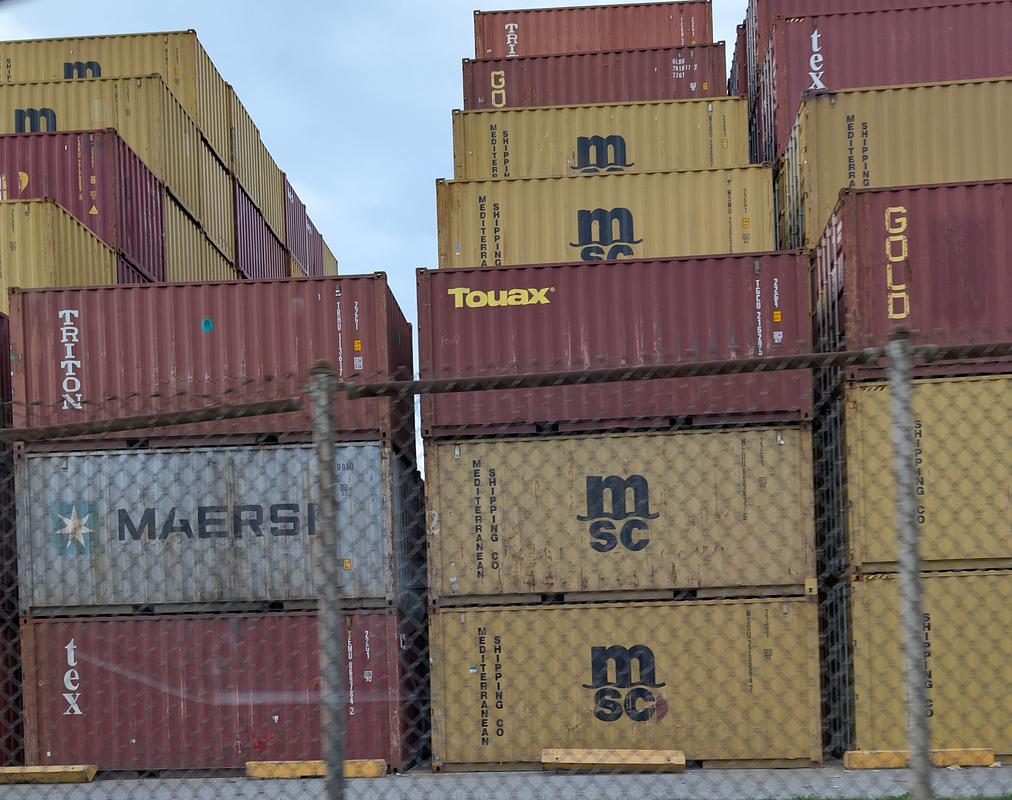
We are right in the middle of the peak Ethiopian coffee export season, and the country is facing a serious shortage of empty shipping containers.
The Ethiopian Maritime Authority recently notified the Customs Commission that container supply has become inconsistent, primarily because fewer vessels are arriving at the Port of Djibouti — Ethiopia's main trade gateway, which handles over 95% of the country's international commerce. With shipping lines reducing sailings due to Red Sea security concerns, the empty containers exporters need to pack and ship their coffee simply aren't available in sufficient numbers.
The timing couldn't be worse. Ethiopia's coffee production for the 2025/26 season is projected at nearly 12 million bags — a record — and export volumes are forecast to reach 7.8 million bags. Global demand for Ethiopian Arabica remains strong. But the logistics bottleneck is real: coffee is sitting in warehouses longer than it should, waiting for containers that aren't there.
The Maritime Authority has called on customs to expedite the unloading of incoming containers so they can be turned around for export use. They've also reinforced directives that containers entering Ethiopia should not be returned empty to Djibouti — they must be returned loaded with export goods.
For specialty coffee buyers, this matters beyond just timing. Coffee is a perishable product. When shipments are delayed, quality can suffer — especially for washed lots where freshness is paramount. The longer your Yirgacheffe or Guji lot sits waiting for a container, the more you risk losing the cup profile you fell in love with on the cupping table.
The Red Sea Disruption: Two Years In and Still Evolving
Attacks on commercial vessels by Houthi forces in the Bab el-Mandeb Strait — the narrow passage connecting the Red Sea to the Gulf of Aden — forced major carriers to reroute around the Cape of Good Hope at the southern tip of Africa. That rerouting adds weeks to transit times and absorbs an estimated 9% of global container ship capacity just to cover the longer distances. Fewer ships calling at Djibouti means fewer empty containers dropped off for Ethiopian exporters.
The impact on Ethiopian coffee has been significant. Shipments to Asian markets like China and Japan have faced the longest delays. Exporters have had to deal with unpredictable vessel bookings, rising freight costs, and steep demurrage charges. In some cases, letters of credit have expired before shipments arrived, creating financial strain across the supply chain.
Ethiopia's Diesel Crisis: Coffee Can't Move If Trucks Can't Run
As if the container shortage and Red Sea disruptions weren't enough, Ethiopia is now facing a severe diesel fuel crisis that is directly threatening the movement of coffee from washing stations and dry mills to Addis Ababa — and from the capital to the port of Djibouti.
The situation escalated rapidly at the end of March 2026. Ethiopia's Minister of Trade and Regional Integration confirmed that over 180,000 metric tons of fuel already in the procurement pipeline failed to arrive after Middle Eastern suppliers — including Saudi Arabia, Kuwait, Bahrain, Turkey, and the UAE — suspended deliveries due to the ongoing regional conflict. Daily diesel availability across the country has been cut in half, dropping from 9.2 million liters to just 4.5 million liters per day.
The impact on the ground is severe. Long queues of trucks, buses, and vehicles stretch for hours at fuel stations across Addis Ababa, Oromia, Amhara, and Tigray. In some regions, diesel is approaching complete unavailability. The government has ordered non-essential public employees to take mandatory leave just to reduce transportation demand — that's how serious it is.
For the coffee supply chain, this is a critical bottleneck. Ethiopia is a landlocked country. Every bag of green coffee that leaves the country has to travel by truck — from remote washing stations and collection points in growing regions like Yirgacheffe, Sidama, and Guji to Addis Ababa, and then onward via the highway corridor to the Port of Djibouti. That's roughly 900 kilometers from Addis to Djibouti, and often several hundred more from the growing regions to the capital. Without diesel, those trucks simply don't move.
The government has responded with a priority fuel allocation system, effective March 31, 2026. Under this directive, exporters and vehicles transporting essential goods — including coffee destined for export — are among the sectors receiving priority access to limited fuel supplies. But priority access doesn't mean unlimited access. With diesel prices on the global market tripling from $80 to $230 per barrel, and the government spending between 15 and 20 billion Birr per month on fuel subsidies, the economy is strained at every level.
What does this mean for coffee buyers? It means potential delays beyond the container and shipping issues we've already discussed. Even when a container is available and a vessel is scheduled, the coffee still has to physically get to the port. If trucking is disrupted — and right now, it is — that adds another layer of uncertainty to arrival timelines. It also adds cost: higher transport fuel prices are passed through to exporters and, ultimately, to buyers.
We're monitoring this situation daily in coordination with our partners on the ground in Ethiopia. If you have open contracts or pending shipments, we're staying on top of logistics and will communicate proactively about any delays.
The C-Market: Historic Levels and What Roasters Should Know
If you're a roaster, you don't need us to tell you that green coffee prices are elevated. But the scale of what's happened over the past 18 months deserves some context.
The Arabica C-market — the ICE futures benchmark — hit an all-time high of approximately $4.40/lb in February 2025, shattering a record that had stood since 1977. While the market has pulled back from that peak and is currently trading in the mid-$2.90 range, these are still historically high levels. The 52-week range spans roughly $2.75 to $4.38 — that kind of volatility makes planning extremely difficult for everyone in the chain.
The drivers are structural and overlapping: consecutive years of global supply deficit, climate stress in major producing countries, rising input costs for farmers (fertilizer, labor, transportation), and the shipping disruptions we've already discussed.
For Ethiopian coffee specifically, cherry prices at origin have tripled in some growing regions. There's intense competition for available coffee — as one Ethiopian exporter put it, "there's more money than coffee." This is pushing FOB prices higher and making exporters cautious about carrying inventory at these elevated levels.
One important trend to watch: the high cost of running washing stations at current cherry prices is shifting more production toward natural processing. If your program relies on washed Ethiopian profiles, availability will likely be tighter this season. We encourage buyers to communicate their processing preferences early and lock in contracts sooner rather than later.
The silver lining? Higher prices are flowing through to farming communities. Ethiopia earned a record $2.65 billion in coffee export revenue last year, supporting an estimated 15 million people across the coffee value chain. That's meaningful and worth celebrating — even as we all adjust to a new cost reality.
Come See Us at World of Coffee San Diego — Booth #2215
Despite the challenges, the specialty coffee industry continues to show incredible resilience and energy. And there's no better proof of that than what's happening in San Diego this month.
Keffa Coffee will be at Booth #2215. Come find us. We'll be showcasing our latest Ethiopian offerings, talking about what's happening at origin, and helping roasters navigate this complex market. Whether you're a longtime Keffa customer or you've never bought from us before, we'd love to connect.
Celebrating 20 Years of Keffa Coffee
This year marks a special milestone for us. Keffa Coffee turns 20. We started in 2006 with a simple mission: bring the best Ethiopian coffee to North America through deep expertise, strong relationships, and an unwavering commitment to quality. Two decades later, we're importing 4–5.5 million pounds annually, serving 500+ customers, and operating from seven warehouses across the U.S. and Canada.