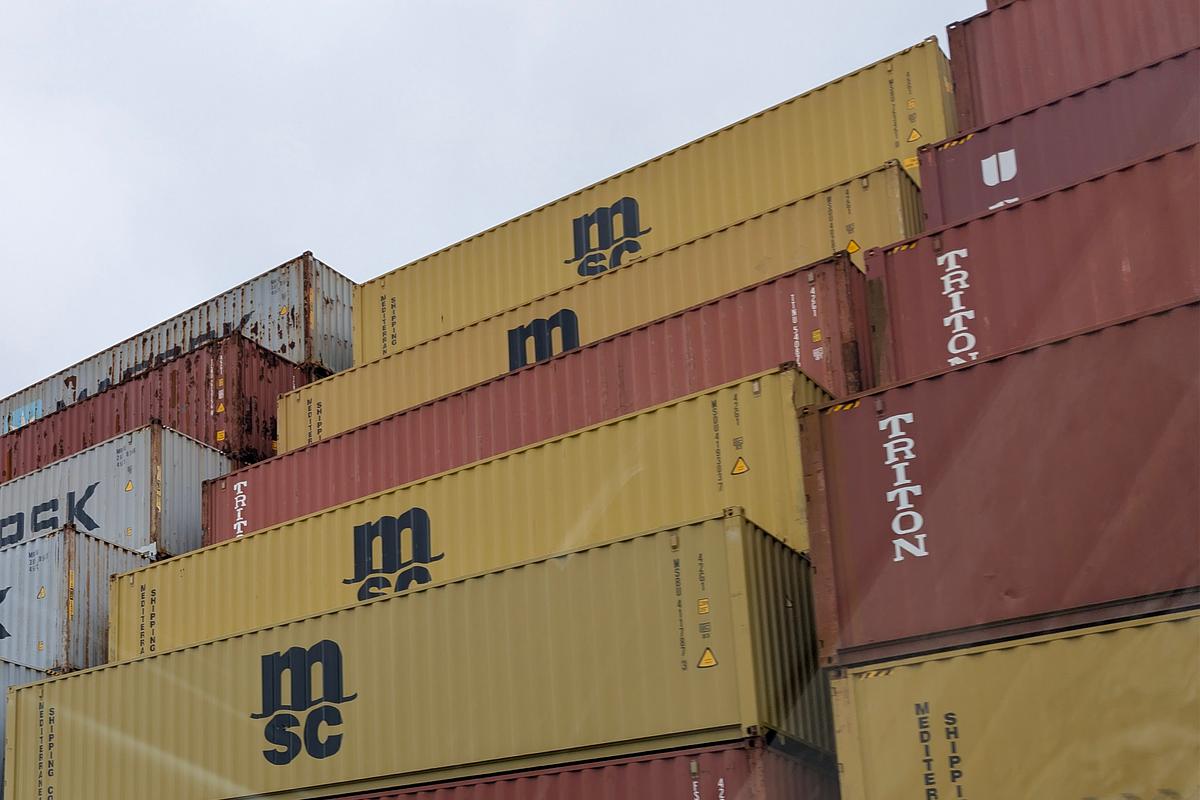
Yesterday was a day the coffee trade will talk about for years. September arabica futures in New York jumped 48.75 cents in a single session — a gain of more than 16% — closing just under $3.50 per pound, a level we hadn't seen since late January. In percentage terms, it was the largest single-day move this century. Robusta followed, climbing almost 9% in London to a five-month high. This morning the market gave a little back, settling around $3.39, but make no mistake: the landscape has changed in three short weeks. Just a month ago, arabica was trading near 19-month lows on expectations of a record Brazilian crop.
So what happened? And what do a European heatwave and artificial intelligence have to do with the price of your green coffee? Let's walk through it.
Rain Where It Shouldn't Be
Brazil's harvest runs through its dry season — June and July are supposed to be dry, sunny picking weather in the arabica belt. Instead, Minas Gerais, the country's largest coffee-growing state, received nearly twenty times its normal rainfall in the last week of June, according to Somar Meteorologia. Picking stopped. Drying patios sat wet. Ripe cherries dropped to the ground, and the excess humidity created ideal conditions for fungal problems at the exact moment when fungicide application isn't practical.
The numbers tell the story: as of July 1, Brazil's harvest was only 52% complete, versus 60% at the same point last year and a five-year average of 55%. Quality concerns are mounting, especially for naturals and semi-washed coffees that depend on clean drying conditions. Meanwhile, certified arabica stocks at the ICE exchange have fallen to roughly 377,000 bags — the lowest in over two years, and less than half of what sat in warehouses a year ago.
Add two more ingredients: Brazilian farmers are holding back sales, waiting for higher prices, and the Brazilian real has strengthened against the dollar, which makes selling in dollars less attractive for producers. Thin supply, slow harvest, reluctant sellers, and a forecast from Rural Clima calling for more rain across much of Brazil by mid-July — with some analysts even whispering about frost risk. That's the recipe for Monday's explosion.
Can Heat in Europe Cause Rain in Brazil?
Here's a question I've been asked more than once in the past week, and it's a fair one. Europe has just lived through its most severe heatwave on record — France logged its hottest day since measurements began in 1947, national records fell across a dozen countries, and the World Health Organization counted more than 1,300 excess deaths in a single week. At the same time, Brazil is drowning in off-season rain. Is one causing the other?
The honest answer: not directly. Europe's heat was driven by what meteorologists call an omega block — a stalled high-pressure dome that trapped hot Saharan air over the continent for weeks. That pattern doesn't reach across the Atlantic and squeeze rain out of clouds over Minas Gerais.
But the two events are cousins, not strangers. They share the same parents: a warming climate and a strengthening El Niño. A warmer atmosphere holds roughly 7% more moisture for every degree Celsius of warming — which is how you get rainfall totals at 1,956% of the historical average in one region while another bakes under record heat. Scientists at World Weather Attribution concluded Europe's June heatwave would have been virtually impossible this early in summer without climate change, and Europe is now warming at twice the global average. The same destabilized system that parks a heat dome over Paris also supercharges the moisture feeding unseasonal storms over Brazil's coffee belt. Extreme heat on one continent and extreme rain on another are two faces of the same coin.
And then there's El Niño — the one traders are calling "Godzilla." Japan's Meteorological Agency confirmed the pattern formed in the Pacific in June, and NOAA now puts high odds on a very strong event, possibly among the strongest on record. For coffee, the real danger isn't this harvest — it's the next one. El Niño years tend to delay Brazil's September–October flowering rains, and flowering sets the size of the 2027 crop. That's why the market isn't just reacting to wet patios today; it's pricing fear about a crop that hasn't even bloomed yet.
The AI Factor: Faster, Bigger, More Violent Moves
There's a third force behind a 16% single-day move, and it doesn't wear boots or carry a picking basket. The majority of futures volume today is computer-generated, and commodity funds increasingly run on algorithms that scan weather models, satellite imagery, news feeds, and price momentum in real time — and act in milliseconds.
This cuts both ways. When the weather models flipped and momentum turned bullish, algorithmic funds didn't wait for confirmation; they piled in together, and their collective buying amplified the move far beyond what fundamentals alone would justify in one session. Analysts covering Monday's rally pointed squarely at algorithm-driven funds capable of moving enormous capital as an accelerant on top of the weather story. Remember: in early June, some of these same models were pushing prices to multi-month lows on record-crop expectations. AI didn't create the rain in Minas Gerais — but it compressed what used to be a two-week repricing into a single trading day.
The flip side is that the same technology is becoming a tool for our side of the business. AI-driven weather and crop models now give importers and roasters earlier, more granular reads on origin conditions, and predictive risk tools help time purchases and hedges. The information advantage that once belonged only to the biggest trade houses is spreading. At Keffa, we watch these signals daily — but we've also learned in twenty years that no model replaces a phone call to a trusted exporter who is standing in the field.
What This Means for Roasters
First, expect volatility, not a one-way market. Today's 3% pullback shows how fast this market breathes. Dry weather is forecast for the first half of July, which could let the harvest catch up and cool prices — until the next forecast run. Between rain, El Niño, algorithmic money, and ICE stocks at multi-year lows, we expect sharp swings in both directions through the rest of 2026.
Second, differentials matter more than ever. When the C market whips around like this, the value in your cup comes from relationships and quality at origin, not from timing the board. Coffees that are already landed, already graded, and already in position are worth their weight right now.
Third, don't wait for perfect clarity — it isn't coming. If there are coffees you know you'll need for fall and winter, this is the time to talk. We have spot positions across our warehouses in Baltimore, Oakland, New Jersey, Houston, Seattle, Vancouver, and Toronto, and fresh arrivals landing through the summer.
We've been sourcing through frosts, droughts, shipping crises, and now algorithm-driven super-spikes since 2006. The lesson is always the same: plan ahead, buy quality, and work with people you trust.
Prefer to listen? Check out the Keffa Coffee podcast, where we talk origin, offerings, and what's moving the market: https://drive.google.com/file/d/1aCcgGM7kxUouFB71ShGbasw8qdVECYW_/view?usp=sharing