TL;DR for Roasters
Before you buy decaf
Not all decaf is created equal. The decaffeination method matters as much as the starting coffee. Here's what to know.
Four specs to require
- 1 Decaf method: Swiss Water Process (SWP) or similar water-only method.
- 2 Starting coffee: Was it specialty grade before decaf? Origin matters.
- 3 Caffeine level: 99.9% caffeine free is the SWP standard.
- 4 Moisture: 10–12%. Decaf can reabsorb moisture during processing.
We source specialty-grade decaf with full traceability. Request samples →
The Method
How Swiss Water Process works
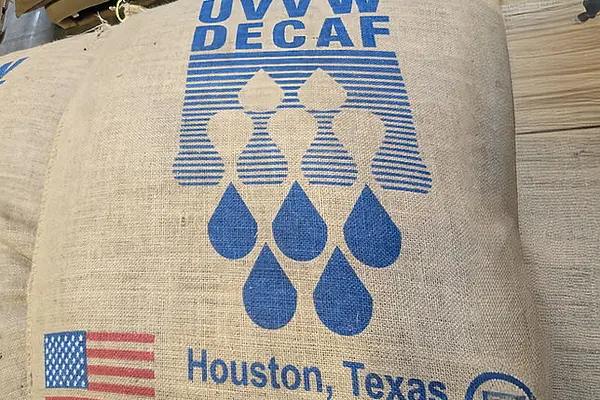
Swiss Water Process uses only water and carbon filters—no chemical solvents. Green coffee soaks in water saturated with coffee solubles (except caffeine). Caffeine migrates from the beans into the water, which then passes through carbon filters that trap only caffeine molecules.
The result: caffeine is removed while flavor compounds stay in the bean. It's slower and more expensive than solvent methods, but it preserves more of what makes specialty coffee special.
Why SWP for specialty
- — Chemical-free: Water only. No methylene chloride or ethyl acetate.
- — Flavor retention: Preserves more origin character than solvent methods.
- — Consumer trust: Customers know the name and look for it.
- — Certified organic compatible: Works with organic certification.
Roast Behavior
What changes when you roast decaf
Faster development
Decaf beans are more porous from the extraction process. They absorb heat faster and can develop quickly. Watch your charge temperature.
Color reads darker
Decaf looks darker than its actual roast level. Use time and temperature—not just color—to judge development.
Don't default to dark
"It's just decaf" isn't an excuse to roast dark. Good decaf deserves the same attention as your best single origins.
Our Decaf Sourcing
Specialty decaf from Ethiopia
We source Ethiopian coffees for decaf because the origin character—floral, citrus, tea-like—holds up through the Swiss Water Process better than generic commodity coffee. You get real Ethiopian character without caffeine.
Sidama Decaf
Our Ethiopian decaf typically comes from Sidama—washed process, then sent to SWP decaffeination. The result maintains Sidama's citrus brightness and floral notes.
Learn about Sidama region →Full traceability
We track the coffee from Ethiopia through decaffeination. You get the same spec transparency as our regular coffees—origin, processing, moisture, water activity—plus SWP certification.