TL;DR for Roasters
Before you buy wet hulled
Wet hulled coffees deliver a specific flavor profile that customers either love or don't understand. Know what you're buying and why.
Four specs to require
- 1 Moisture at hulling: Wet hulled at 30–35% moisture (not dried to 12% first).
- 2 Final moisture: 10–12% at export. Check arrival moisture too.
- 3 Defect count: Grade 1 Mandheling = ≤8 full defects per 300g (local standard; Ethiopian Grade 1 washed is ≤3).
- 4 Cup sample: Earth without mustiness. Herbal without dirty. Full body without harshness.
We cup every Sumatra lot before and after arrival. Request samples →
The Basics
What "wet hulling" means
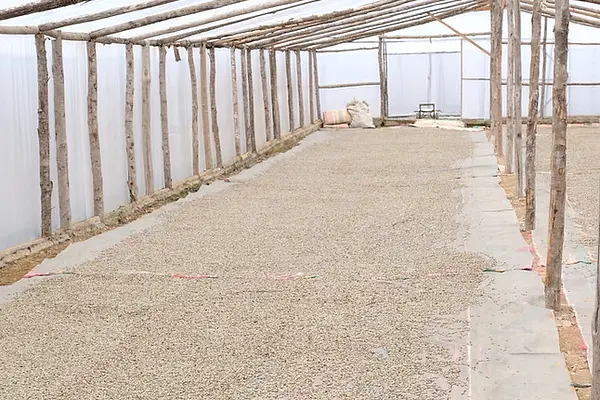
In wet hulling (Giling Basah), coffee is hulled while still wet—at 30–35% moisture instead of the 10–12% used in other processes. The parchment is stripped off early, and the bare green bean finishes drying exposed to air.
This happens because Indonesia's high humidity makes parchment-drying slow. Farmers sell parchment wet to collectors, who hull and finish drying. The exposure creates the distinctive flavor and blue-green color.
Quick specs
- — Hulling moisture: 30–35% (not fully dry)
- — Final drying: Green bean exposed to air
- — Appearance: Blue-green, softer bean
- — Cup: Earthy, herbal, low acidity, full body
The Process
How wet hulling works
Pick and depulp
Farmers depulp cherry same day, like washed process.
Ferment briefly
Overnight fermentation in bags or tanks. Mucilage loosens.
Wash and partial dry
Wash off mucilage. Dry parchment to 30–35% moisture.
Sell to collector
Farmers sell wet parchment. Collectors aggregate lots.
Wet hull
Parchment removed while wet. Green bean exposed.
Final drying
Bare green bean dries to 10–12%. Develops signature color and flavor.
Flavor
The wet-hulled profile
When it's clean
Cedar, tobacco leaf, dark chocolate. Herbal complexity without mustiness. Syrupy body. Smooth, almost muted acidity.
When it goes wrong
Musty, moldy, dirty. Baggy or past-crop. Harsh, medicinal. These are process failures, not "Sumatra character."
Roast behavior
Lower density, more moisture uptake. Benefits from longer development. Works well into dark roasts without becoming bitter.
What Sumatra is not
Wet hulling creates a specific profile—earthy, herbal, low acid, full body. If you want bright citrus or berry fruit, Sumatra won't give you that. Choose origins like Ethiopia, Kenya, or Colombia instead. Browse Ethiopia coffees →
Connecting Flavors
Sumatra as a gateway coffee
Customers who love Sumatra often respond well to Ethiopia Harrar. Harrar is a natural Ethiopian with similar earthy, winey notes but more fruit complexity. It's a bridge from "Sumatra lovers" to "Ethiopian explorers."
Current Inventory