TL;DR for Roasters
Before you buy a washed coffee
Washed coffees are the workhorse of specialty. Predictable, clean, and expressive of origin character without processing noise. Here's what to know.
Four specs to require
- 1 Moisture: 10–12%. Washed coffees dry faster, so hitting target is easier.
- 2 Water activity: 0.50–0.60. Storage stability threshold.
- 3 Defect count: Grade 1 washed = ≤3 full defects per 300g. Grade 2 = ≤8.
- 4 Fermentation time: 12–36 hours typical. Longer = more risk of over-ferment.
We provide full spec sheets on every lot. Request samples →
The Basics
What "washed process" means
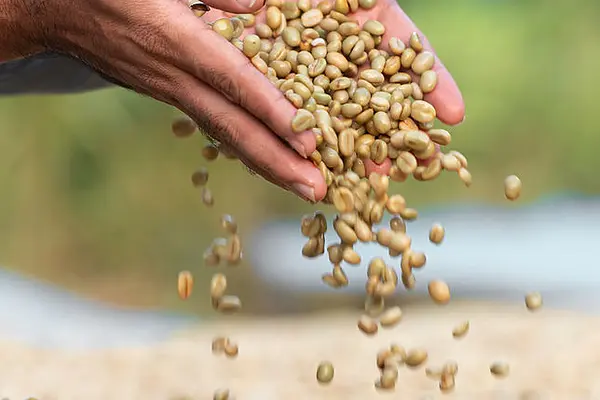
In washed processing, the coffee cherry's fruit is mechanically removed before drying. The seed ferments briefly in water to remove the remaining mucilage, then dries clean. No fruit contact during drying.
The result is a cup that expresses the seed's inherent character—terroir, variety, elevation—without processing flavor layered on top. That's why washed coffees are the standard for evaluating origin quality.
Quick specs
- — Fruit removal: before drying (mechanical depulping)
- — Fermentation: 12–36 hours in water tanks
- — Drying time: 7–14 days typical (faster than naturals)
- — Cup: cleaner, brighter, more acidity-forward
The Process
How washed processing works
Pick ripe cherry
Only fully ripe. Underripes are harder to depulp and affect fermentation.
Depulp
Mechanical pulpers remove the outer fruit within 24 hours of harvest.
Ferment in tanks
Seeds sit in water tanks 12–36 hours. Naturally occurring enzymes break down mucilage.
Wash and grade
Wash channels separate by density. Floaters and defects removed.
Dry on beds or patios
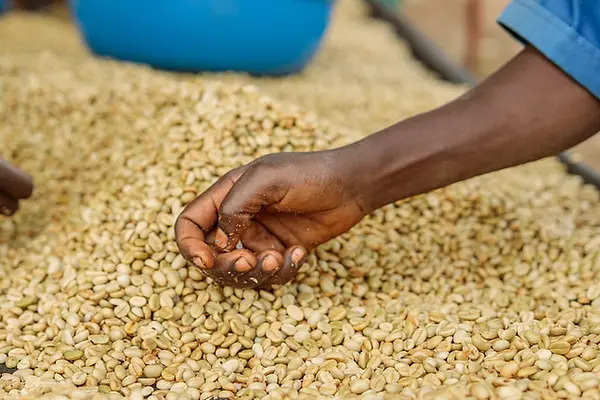
Clean parchment dries faster than naturals. 7–14 days typical.
Rest and mill
Rest in parchment. Dry mill removes parchment, grades by size/density.
Processing Comparison
Washed vs. Natural: What changes
Washed
- • Cleaner, more transparent cup
- • Brighter, more defined acidity
- • Lower body than naturals
- • More consistent lot-to-lot
- • Terroir-expressive
Natural
- • More fruit-forward, complex cup
- • Softer, rounder acidity
- • Heavier body and sweetness
- • Higher variance lot-to-lot
- • Processing-expressive
For Ethiopia: Processing determines cup character more than region. A washed Guji and washed Yirgacheffe share more DNA than a washed Guji and natural Guji. Read more →
Case Study
YirgZ™—what consistent washed looks like
YirgZ is our zero-defect washed Ethiopian trademark. It solves the "famous-name disappointment" problem—when Yirgacheffe on the label doesn't deliver Yirgacheffe in the cup.
The YirgZ standard
- 1 Zero defects — not "Grade 1," but actually zero primary defects
- 2 Washed only — for the clarity that defines Yirgacheffe
- 3 YCFCU sourced — from the Yirgacheffe cooperative that sets the standard
The YirgZ cup
The floral, citrus, tea-like character that made Yirgacheffe famous—delivered consistently because we control the process.
Why it matters
When customers buy "Yirgacheffe" they have expectations. YirgZ delivers on those expectations every time—no surprises, no "this lot was different."
Current Inventory