TL;DR for Roasters
Why processing dominates
When roasters ask me about Ethiopian coffee, they usually start with region: "What's the difference between Guji and Sidama?" The real question should be: "Natural or washed?"
The southern triangle
Guji, Sidama, and Yirgacheffe are geographically close—sometimes less than 30km apart. Same latitude, similar elevation ranges, overlapping microclimates.
- 1 Guji: 1,850–2,200m elevation. Both naturals and washed.
- 2 Sidama: 1,500–2,200m elevation. High washed production.
- 3 Yirgacheffe: 1,700–2,200m elevation. Famous for washed lots.
Within this triangle, terroir differences are subtle. Processing differences are dramatic.
The Science
Why processing creates more variation
Coffee processing determines how sugars from the cherry migrate into the bean, which compounds develop during fermentation, and how the bean structure changes during drying.
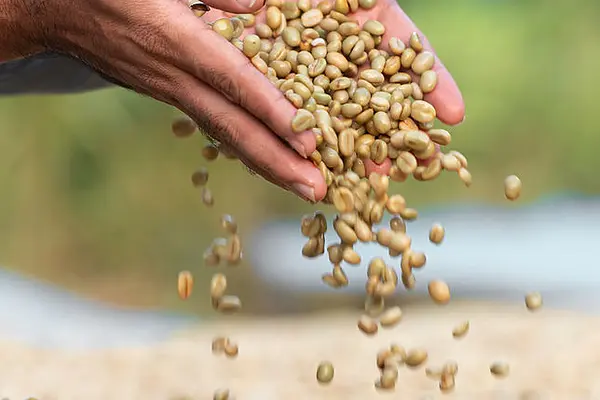
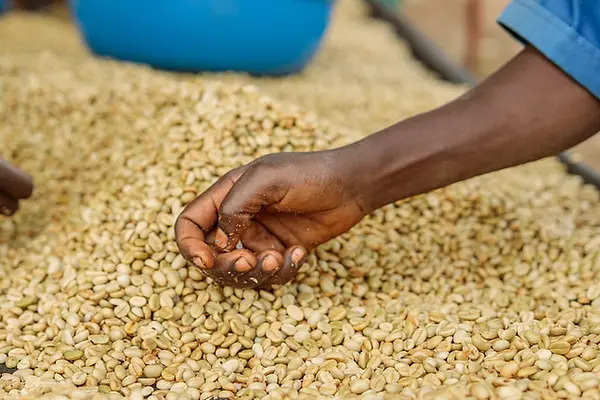
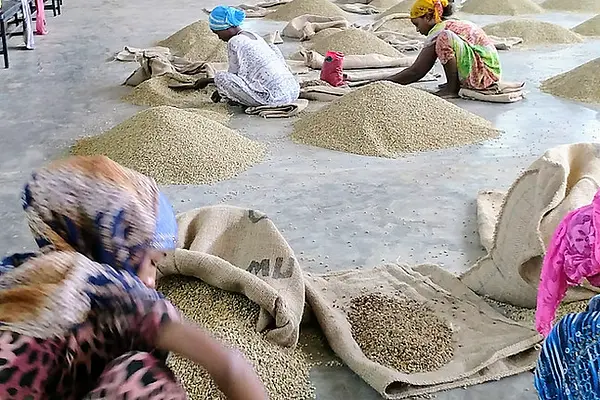
In natural processing, the entire cherry dries around the bean for 3–4 weeks. Fruit sugars and fermentation compounds penetrate the seed. The result is fruity, wine-like complexity.
In washed processing, the fruit is removed within hours of picking. Fermentation is controlled in water tanks. The bean dries alone. The result is clean, bright, and tea-like.
What changes with processing
Sugar migration
Naturals absorb fruit sugars for weeks. Washed beans don't.
Fermentation compounds
Different environments create different acids and aromatics.
Bean density
Processing affects moisture distribution and cell structure.
Roast behavior
Naturals need different roast approaches than washed.
Side by Side
Natural vs washed: cup profile comparison
Natural Process
- → Fruit notes: Blueberry, strawberry, tropical fruit, wine-like
- → Body: Heavy, syrupy, sometimes jammy
- → Acidity: Softer, fermented fruit acids
- → Consistency: More variable batch to batch
- → Best for: Single origins, adventurous customers, fruit-forward menus
Example: ARDI Natural Guji
Washed Process
- → Flavor notes: Citrus, jasmine, bergamot, black tea
- → Body: Light to medium, clean finish
- → Acidity: Bright, crisp, structured
- → Consistency: More uniform batch to batch
- → Best for: Pour-over bars, tea drinkers, clean cup seekers
Example: YirgZ Washed Yirgacheffe
The Exception
Harrar: where region matters
Harrar is different. Eastern Ethiopia, drier climate, lower elevation (1,500–1,800m), and distinct terroir that creates a flavor profile unlike anything in the southern triangle.
Harrar vs southern naturals
Even comparing natural to natural, Harrar stands apart:
- 1 Lower elevation = different bean development
- 2 Drier climate = faster, more intense drying
- 3 Heritage varieties = unique genetic expressions
- 4 Terroir signature = unmistakable in blind cupping
This is the one region where terroir consistently overrides processing in determining cup character. Learn more about Harrar →
Buying Strategy
How to think about your Ethiopia menu
Start with processing
Decide first: do you want fruit bombs (natural) or clean cups (washed)? This shapes your menu more than origin choice.
Use region for variety
Once you've chosen processing, rotate regions for interest. A Guji natural and a Sidama natural offer subtle variety within a profile.
Harrar for uniqueness
If you want something truly distinct from the southern triangle, Harrar delivers a different terroir signature entirely.
Blend anchors
Washed Ethiopians add brightness to blends. Naturals add fruit complexity. Match processing to your blend goal.
Customer communication
Train staff to describe processing first. "This is a natural process" sets expectations better than "This is from Guji."
Roast profiling
Naturals and washed need different roast approaches. Processing affects charge temp, RoR, and development time.
Natural Process
Current natural Ethiopia lots
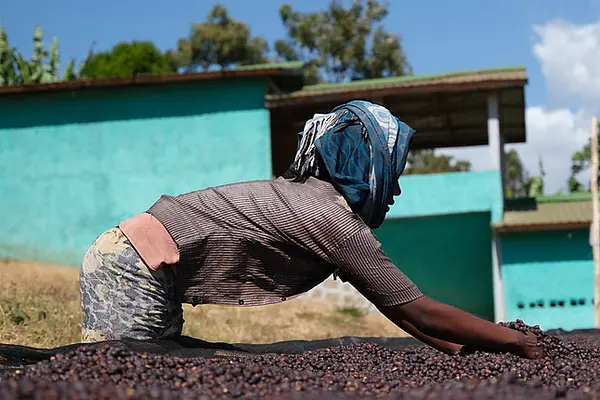
WUSH WUSH
SNNP, Chito
Sangaria | Fruit Bomb | Floral | Sweet Finish
Natural, 120 hours dry Fermentation! · In Stock
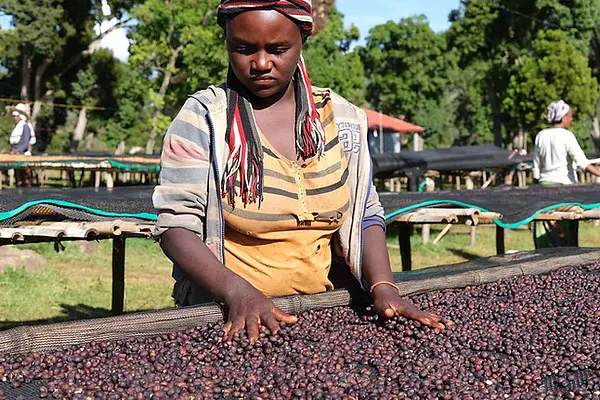
Natural ARDI
Sidama, Damo
Clean Strawberry | Peach | Sweet Finish
Natural · In Stock
Harrar Gr 1
Oromia, Micheta
Chocolate | Barries | Carmel | Full Body
Natural · In Stock