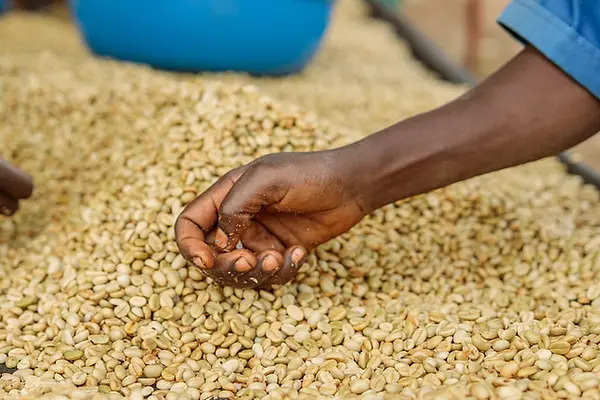
The Challenge
Natural coffees are volatile by nature
Most naturals vary year to year. Drying conditions change. Fermentation is hard to control. Storage affects flavor. Roasters learn to expect inconsistency from natural process coffees.
What most roasters accept
"Naturals are different every year." "You have to adjust your roast profile each crop." "It's part of the charm."
We disagree. Consistency is possible. It just requires discipline.
"This is the only coffee that's been consistent since 2009."
— Samuel Demisse on ARDI
The Name
Named after an early hominin discovery
ARDI takes its name from Ardipithecus ramidus—a 4.4-million-year-old hominin fossil discovered in Ethiopia's Afar region. One of the earliest known human ancestors, the discovery reshaped how we understand human evolution.
We chose the name because ARDI represents something foundational: what natural process coffee can be when done right. A reference point. A standard.
Independently Reviewed
Coffees roasted from ARDI have earned up to 95 points across a dozen independent Coffee Review evaluations — including a first-place finish at Ethiopia's Taste of Harvest competition.
95 — Coava Coffee Roasters, 93 — Klatch Coffee, 92 — PT's Coffee — Coffee Review, the industry's independent 100-point rating institution since 1997.
The System
How ARDI consistency happens
Same producer network
20+ year relationships with the same washing stations and farmers in Guji. They know the ARDI standard. We don't switch sources chasing price.
Cup at origin
Sam cups every potential ARDI lot at origin before we commit. If it's not the ARDI cup—that fruit-forward, clean, balanced profile—we leave it. No exceptions.
Spec requirements
Moisture 10–12%. Water activity 0.50–0.55. These aren't suggestions—they're requirements. Lots that don't meet spec don't become ARDI.
Re-cup on arrival
Every lot gets cupped again in Baltimore. If the arrival sample doesn't match the origin sample, we investigate. Transit damage happens—but we catch it.
Climate-controlled storage
Naturals need consistent temperature and humidity. Our warehouse maintains optimal conditions. The ARDI you buy in October cups like the ARDI from June.
Volume commitment
We buy enough ARDI to serve our customers year-round. This gives us leverage with producers and ensures consistent supply across harvest cycles.
The Cup
What stays the same, year after year
Fruit-forward without ferment. Sweetness without booze. The balance that makes roasters reorder year after year.
Body
Full, syrupy
Acidity
Bright but soft-edged
Finish
Clean, lingering fruit
Roaster feedback
"We've been buying ARDI for 8 years. Same roast profile works every time."
"The only natural we trust for espresso blend."
"Our customers know the flavor. Consistency matters."
Comparison
ARDI vs typical naturals
| Factor | ARDI | Typical Natural |
|---|---|---|
| Year-to-year variance | Minimal | Significant |
| Roast profile adjustment | Rarely needed | Often needed |
| Ferment character | Clean fruit | Variable (sometimes boozy) |
| Shelf stability | Strong (low WA) | Variable |
| Blend reliability | High | Risky |
Current Inventory