TL;DR for Roasters
- →Skin removed, mucilage kept. The seed dries in its own fruit sugars for 2–3 weeks.
- →Color grades = mucilage + drying speed. White and yellow honey cup close to washed; red and black honey push toward natural territory.
- →Mostly a Central American method. Costa Rica popularized it during the early-2000s micro-mill boom.
- →QC risk is drying. Sticky parchment clumps and dries unevenly — demand moisture and water activity numbers.
- →"Honey" on a tasting note ≠ honey process. Our wet-hulled Sumatras taste of honey; they are not honey processed.
- →Ethiopia rarely honeys. If you want that syrupy middle ground from our book, a clean natural is the nearest profile.
The Method
What honey process actually is
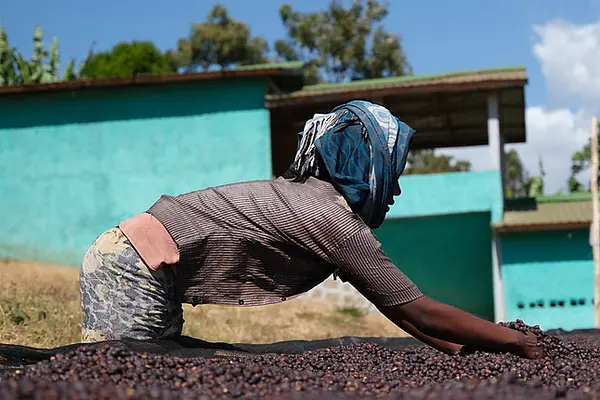
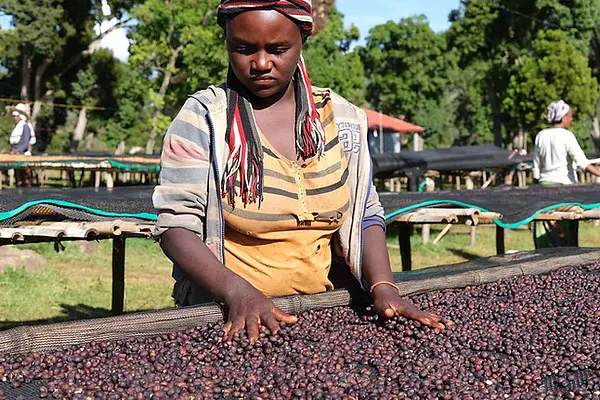
A cherry has skin, fruit pulp, a sticky mucilage layer, parchment, then the seed. Washed processing strips everything before drying. Natural processing dries the whole cherry intact. Honey process splits the difference: a depulper removes skin and pulp, then the seed goes to the drying beds still coated in mucilage.
That mucilage is nearly pure sugar. As the seed dries inside it for two to three weeks, sweetness and body concentrate in the cup — without the full fruit-ferment character a natural picks up from the whole cherry.
The honey color grades
- White honey: ~10–20% mucilage left, fast drying. Cups closest to washed.
- Yellow honey: ~25–50% mucilage, regular turning. Gentle sweetness, clean.
- Red honey: ~50–75% mucilage, slower drying. Ripe fruit, heavier body.
- Black honey: ~100% mucilage, shade-dried over weeks. Intense, natural-adjacent, highest risk.
Percentages are conventions, not standards — every mill calibrates its own depulper. Ask, don't assume.
The Cup
What honey process tastes like
Syrup is the through-line: brown sugar, dried stone fruit, round body, softer acidity than a washed lot from the same farm. Costa Rica built its modern reputation on this profile during the micro-mill boom of the early 2000s, and Central America still produces most of the world's honey lots. It roasts more predictably than a natural but needs slightly gentler charges than a washed — the sugar-dense seed scorches earlier.
One distinction worth stating plainly: a "honey" tasting note is not honey process. Our wet-hulled Sumatras cup with honey sweetness — they're processed by an entirely different method. Read the process line on the spec sheet, not the flavor notes.
Before You Buy
QC questions to ask
- 1.Moisture and water activity. Sticky parchment clumps on the bed and dries unevenly. Accept 10–12% moisture and aW under 0.60, same as any lot — no exceptions for "experimental" coffees.
- 2.Drying protocol. How many days, how often turned, shade or sun? Black honey without meticulous turning is a mold risk, not a flavor choice.
- 3.Which honey? "Honey process" alone tells you little — white and black honey are nearly different coffees. Get the color grade in writing.
- 4.Cup it against a washed and a natural. If the honey lot doesn't sit clearly between them with something extra, buy the cheaper washed.
From Our Book
The honest inventory note
Ethiopia — the core of our book — overwhelmingly washes or naturals its coffee, so we don't carry honey lots today. If it's the syrupy, sweet middle ground you're after, a clean natural gets you closest: same sugar-forward character, Ethiopian complexity on top. Cup one against your current honey and see where it lands.
WUSH WUSH
SNNP, Chito
Sangaria | Fruit Bomb | Floral | Sweet Finish
Natural, 120 hours dry Fermentation! · In Stock
Natural ARDI
Sidama, Damo
Clean Strawberry | Peach | Sweet Finish
Natural · In Stock
Harrar Gr 1
Oromia, Micheta
Chocolate | Barries | Carmel | Full Body
Natural · In Stock
Common Questions
Honey Process FAQs
Does honey process coffee contain honey?
No. The name describes the sticky mucilage layer left on the seed during drying — it feels like honey on the drying beds. No honey, no added sweetener, nothing but the coffee cherry's own sugars.
What is the difference between white, yellow, red, and black honey?
How much mucilage stays on the seed and how slowly it dries. White honey (~10–20% mucilage) cups closest to a washed coffee; black honey (all of it, shade-dried for weeks) approaches natural-process intensity. The color names refer to how the parchment looks after drying, and every mill calibrates differently — get the grade in writing.
Does Keffa sell honey process coffee?
Not currently — Ethiopia, the core of our book, overwhelmingly washes or naturals its coffee. If you want the syrupy middle ground honey process occupies, our clean naturals are the nearest in-stock profile. Cup one against your current honey lot; samples are free.
Is honey process the same as pulped natural?
Functionally, yes. "Pulped natural" is the older Brazilian term; "honey process" is what Costa Rica's micro-mills called their refined version in the early 2000s, with the color-grade system layered on. Both mean skin off, mucilage on, then dried.