TL;DR for Roasters
What defect counts mean for your roast
Defects show up in the cup. Some ruin individual cups (stinkers). Some drag down the whole batch (quakers). Here's what to watch for.
SCA specialty standard
- 1 Sample size: 300 grams (about 1,200 beans depending on screen size).
- 2 Grade 1: ≤3 full defects, no primary defects, no quakers.
- 3 Grade 2: ≤8 full defects. Still specialty eligible if cup score hits 80+.
- 4 Cup score: 80+ required for specialty regardless of visual grade.
We provide full defect counts on every lot. Request samples →
Category 1
Primary defects (severe)
Full black
Bean is entirely black. Caused by over-fermentation or severe disease.
Cup impact: Fermented, rotten, ruins multiple cups.
Full sour
Yellowish-brown, often with wrinkled surface. Over-fermented or picked overripe.
Cup impact: Vinegar, sour, off-putting acidity.
Fungus damage
Yellow or reddish-brown spots. Mold growth during processing or storage.
Cup impact: Musty, moldy, potential health risk.
Foreign matter
Stones, sticks, nails, glass. Contamination during processing.
Cup impact: Safety hazard. Grinder damage.
Dried cherry (pod)
Entire cherry that wasn't depulped. Common in dry process with poor sorting.
Cup impact: Fermented, dirty notes.
Severe insect damage
3+ holes or tunneling through bean. Coffee borer beetle is common cause.
Cup impact: Dirty, thin, papery.
Category 2
Secondary defects (less severe)
Partial black
Part of bean is black. Same causes as full black, less severe.
Count: 3 partial blacks = 1 full defect
Partial sour
Part of bean shows sour characteristics. Less impact than full sour.
Count: 3 partial sours = 1 full defect
Quaker (immature)
Light-colored, low density. Picked before fully ripe.
Count: 5 quakers = 1 full defect
Broken/chipped
Mechanical damage during milling. Fragment is less than half a bean.
Count: 5 brokens = 1 full defect
Shell (elephant ear)
Malformed bean—outer layer only. Genetic or processing cause.
Count: 5 shells = 1 full defect
Slight insect damage
1–2 holes. Less severe than full insect damage.
Count: 10 slight insect = 1 full defect
Ethiopia Specific
Ethiopia's grading system
Ethiopia uses its own grading scale (Grades 1–9) based on defect count, screen size, and cup quality. Understanding what these grades mean helps you buy better.
Washed grades
Grade 1: ≤3 defects per 300g. Highest quality washed.
Grade 2: 4–12 defects per 300g. Still specialty-eligible.
Natural grades
Grade 1: ≤15 defects per 300g. Highest quality natural.
Grade 3: 16–45 defects. Common commercial natural.
Grade 4: 46–100 defects. "Blender grade"—not for single origin.
Our standard: We focus on Grade 1 and Grade 2 washed, Grade 1 naturals. Our YirgZ trademark goes beyond Grade 1 to "zero defect"—no primary defects at all. Learn about YirgZ →
Current Inventory
Graded coffees in stock
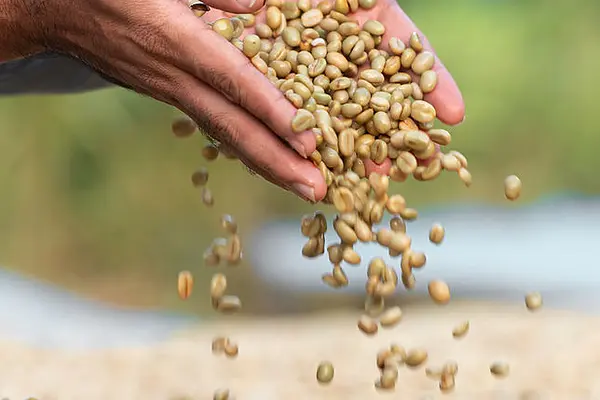
Washed Sidama
Southern Nations, Nationalities, and Peoples' Region, Bensa
Floral | Lemongrass | Green Tea | Peach
Washed · In Stock
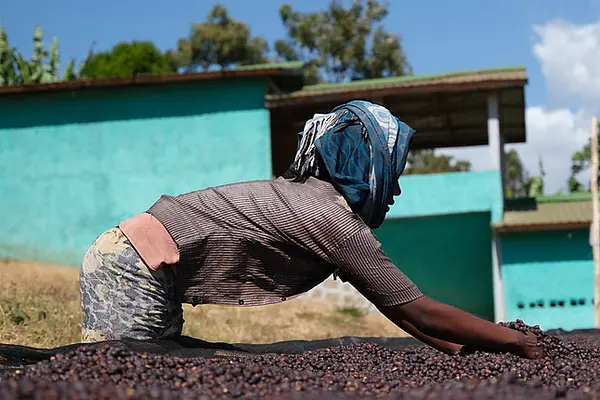
WUSH WUSH
SNNP, Chito
Sangaria | Fruit Bomb | Floral | Sweet Finish
Natural, 120 hours dry Fermentation! · In Stock
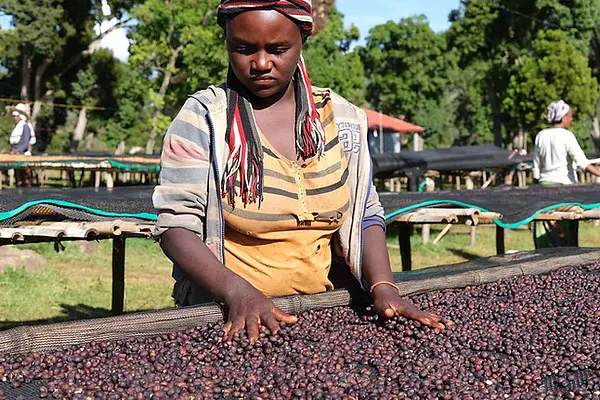
Natural ARDI
Sidama, Damo
Clean Strawberry | Peach | Sweet Finish
Natural · In Stock
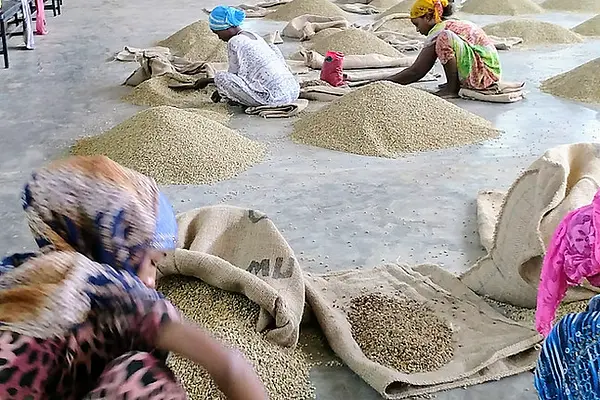
Harrar Gr 1
Oromia, Micheta
Chocolate | Barries | Carmel | Full Body
Natural · In Stock
Washed Guji
Oromia, Shakiso
Black Tea | Floral | Bergamot
Fully washed · In Stock